US Invasion of Panama
Panama
1989, Dec 20
The US launched a massive military invasion of Panama with 27,000 troops to remove Manuel Noriega from power. The operation came during a critical period when the US was scheduled to transfer control of the Panama Canal to Panama by 1999 under the Torrijos-Carter Treaties. Noriega, a former CIA asset who had been on the US payroll, was accused of drug trafficking and threatening American lives, but the strategic goal was installing a compliant government under Guillermo Endara to ensure US interests in the canal during the handover period. The operation destroyed large sections of Panama City, particularly the El Chorrillo neighborhood, and killed between 500-3,000 Panamanian civilians (disputed figures).
International condemnation: The UN General Assembly and Organization of American States condemned the invasion as a violation of international law, damaging US credibility in Latin America
Undermined treaty legitimacy: The invasion made the US look like it was forcing the canal handover on its own terms through military might rather than respecting Panamanian sovereignty, undermining the legitimacy of the partnership
Precedent for unilateral action: Established a post-Cold War pattern of US military intervention without clear legal justification, undermining international norms
Regional distrust over canal control: Latin American nations saw it as the US refusing to genuinely relinquish control, creating lasting anti-American sentiment that complicated future negotiations over canal usage rights
Blowback in the War on Drugs: Despite removing Noriega, Panama remained a major drug transit route, showing military action was ineffective against drug trafficking
Hypocrisy exposed: The US had supported and funded Noriega for years, revealing contradictions in foreign policy that fueled anti-American sentiment. The selective intervention was particularly damaging - the US ignored or supported regimes guilty of far worse atrocities (Chile under Pinochet, Paraguay under Stroessner, El Salvador's death squads, Iraq under Saddam Hussein during the Iran-Iraq war), making it clear the invasion was about canal control rather than human rights or international law
Legal costs: The invasion and subsequent trial of Noriega cost hundreds of millions of dollars with minimal long-term strategic benefit
Sources
Books
America's Prisoner: The Memoris of Manuel Noriega
by Peter Elsner
The Banana Wars
by Ivan Musicant
Shooting the Moon
by David Harris
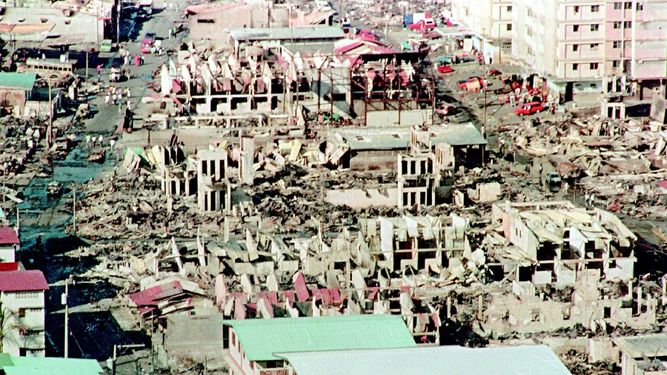
El Chorrillo after the inital bombing
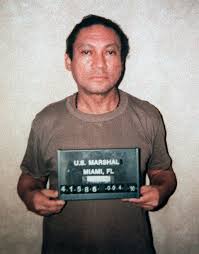
Noriega Arrest